AUSTRIA JUST DROPPED A NUCLEAR BOMB ON ITS MUSLIM COMMUNITIES – THIS CHANGES EVERYTHING!!!🔥Government Unleashes Brutal Crackdown On Mosques, Foreign Funding & Hijabs – Von Der Leyen & Globalists In Total Fury!🚨Austria has just gone FULL SEND and enacted one of the toughest anti-Islam crackdowns in Europe!
In a startling turn of events that could reshape the social fabric of Europe, Austria has enacted groundbreaking policies that impact its Muslim population in ways previously unimagined. This decisive move not only reveals the country’s stance on immigration and social integration but also raises urgent questions about religious freedoms and the future of multiculturalism in the nation.

The Austrian government, led by Chancellor Karl Nehammer, has announced a sweeping initiative aimed at redefining its approach to Islam and Muslim communities nationwide. Citing concerns over radicalism and national security, officials have rolled out a series of changes that many critics label as discriminatory. The policy shift introduces stringent regulations around religious practices, funding for Islamic institutions, and the education of Muslim children.
Perhaps the most alarming aspect of this new legislation is the imposition of stricter oversight on mosques and Islamic organizations. Under the guise of combating extremism, the government now requires all mosques to register with authorities and submit to regular audits of their teachings and practices. This unprecedented level of governmental control raises serious red flags about the potential for abuse and erosion of religious freedoms. Many fear that this is merely a precursor to further measures aimed at suppressing the cultural identity of Austria’s Muslim population.
The reverberations of this policy are felt immediately, with community leaders and human rights advocates expressing their outrage. In a hastily organized press conference, the head of the Austrian Islamic Community, Ümit Vural, condemned the government’s actions, asserting, “This is a blatant attack on our rights and our dignity as Muslims. We will not be silenced.” His impassioned words encapsulate the sentiments of many within the community who view this as an existential threat.

With protests already underway in major cities like Vienna, Graz, and Linz, demonstrators are taking to the streets to voice their opposition. In a scene of palpable tension, protesters clashed with police outside of the government building, demanding an immediate reversal of the new policies. The atmosphere is charged, with chants of “Freedom of Religion!” ringing out as demonstrators express their commitment to fighting for their rights.
Adding fuel to the fire, critics of the government’s approach argue that these changes signal a dangerous precedent not only for Muslims in Austria but for minorities throughout Europe. They claim this could trigger a domino effect, encouraging other nations to adopt similar stances under the guise of national security. What was once seen as a tolerant society is now grappling with the backlash of populist sentiments that foster division and distrust.
The timing of this policy shift is not coincidental. In recent months, Austria has faced increasing pressures from right-wing parties that capitalize on public fears surrounding immigration and cultural dilution. This political climate has emboldened the government’s current path, creating a precarious situation for Muslims who find themselves under scrutiny and suspicion.
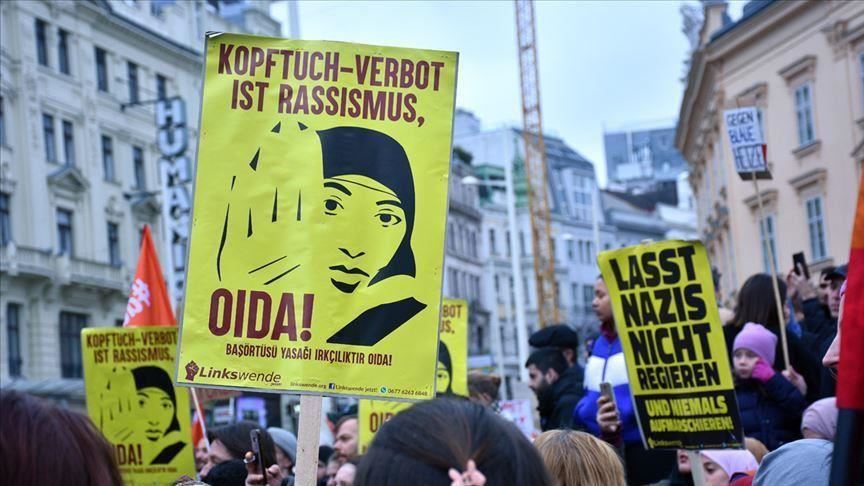
As the nation grapples with these developments, questions abound regarding Austria’s commitment to human rights standards. International watchdog organizations have taken an interest in the situation. Amnesty International and Human Rights Watch have already issued statements urging the Austrian government to reconsider its course of action, warning that such policies could lead to systemic discrimination and social unrest. The global eyes are watching closely, as Austria’s actions resonate far beyond its borders.
Meanwhile, discussions regarding potential legal challenges to the government’s decisions are already underway. Lawyers specializing in civil rights are mobilizing to explore avenues for appeals and protections for those directly affected. The legal landscape surrounding religious freedoms in Austria has been robust, but these recent changes threaten to unravel decades of progress.
As the situation unfolds, the response from Austria’s Muslim community remains firm yet wary. Many are rallying together to form coalitions aimed at advocating for their rights while addressing the broader misconceptions that plague public perception. Leaders within the community stress the importance of dialogue, urging government officials to engage with them rather than impose top-down regulations that stifle their identities.
Additionally, the impact on the nation’s economy looms large. With many Muslim-owned businesses at risk due to fear of backlash and economic uncertainty, the repercussions could extend to Austria’s financial health. If these tensions escalate further, there is a real possibility of economic fallout, impacting not just the Muslim community but all Austrians.
In a nation that prides itself on its artistic heritage and cultural diversity, this pivotal moment highlights the fragility of these values. Austria finds itself at a crossroad, where the path it chooses could either reinforce its longstanding commitment to human rights or descend into an era marked by division and mistrust.
As political leaders deliberate on how to navigate this fractious issue, one thing is certain: the actions taken by the Austrian government represent a drastic shift in societal dynamics. The ramifications of these decisions will likely reverberate for years to come, impacting not only the Muslim community but the entire European landscape. The story is still evolving, and every moment counts as Austria embarks on an uncertain journey into a contentious future.
This breaking news not only changes everything for Muslims in Austria; it sends shockwaves through the entire European continent, compelling observers to reflect on what this could mean for the future of multiculturalism and integration in an increasingly polarized world. The call for unity, understanding, and resilience resounds louder than ever as Austria stands on the brink of a historic transformation.