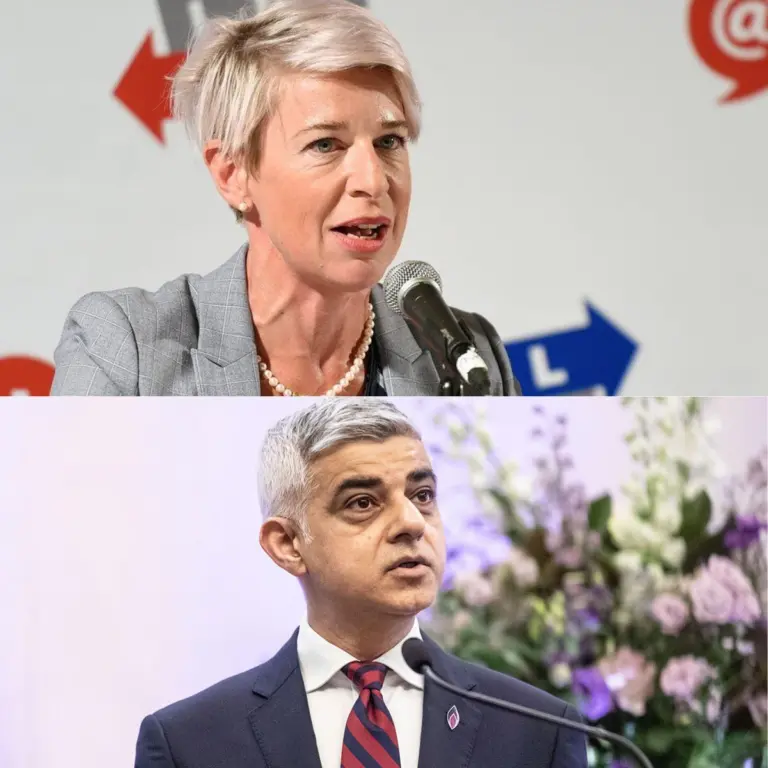
The “most hated woman in Britain” has just doubled down.While the world demands she be banned
A storm of controversy has erupted across the United Kingdom after Katie Hopkins delivered a defiant response to critics demanding she withdraw her recent statements about immigration policy and cultural integration debates.

Declaring that she “will not be silenced,” Katie Hopkins positioned herself at the center of a rapidly escalating national argument about free speech, responsibility, and the boundaries of public discourse in modern Britain.
Supporters immediately rallied behind her stance, arguing that controversial opinions should be confronted through debate rather than suppression, emphasizing that democratic societies depend on the ability to express even uncomfortable perspectives openly.
Critics, however, warned that rhetoric surrounding immigration must be handled carefully, stressing that language has consequences and can shape perceptions in ways that influence social cohesion and public trust across diverse communities nationwide.
The clash between these opposing views has transformed a single media moment into a broader cultural flashpoint, drawing politicians, analysts, and everyday citizens into an intense and often emotional conversation unfolding in real time.
Social media platforms have become the primary battleground, where clips, quotes, and reactions circulate at extraordinary speed, amplifying both support and outrage while blurring the lines between commentary, interpretation, and factual context.
Observers note that viral amplification can magnify individual statements far beyond their original setting, creating narratives that evolve independently as audiences interpret meaning through their own beliefs, experiences, and political alignments.
At the heart of the debate lies a deeper question about how societies balance the right to speak freely with the need to maintain respectful and constructive dialogue in increasingly polarized environments shaped by rapid information exchange.
Political figures have begun weighing in cautiously, aware that any response may further inflame tensions or alienate segments of the electorate already deeply divided on issues related to immigration, integration, and national identity.
Some commentators argue that the controversy reflects unresolved anxieties about economic pressure, cultural change, and the pace of social transformation, all of which contribute to heightened sensitivity around immigration-related discussions.
Others suggest that focusing solely on provocative statements risks overlooking substantive policy questions, including how governments can effectively manage borders while fostering inclusive communities that respect both diversity and shared civic values.
Media outlets have adopted varied approaches in covering the story, with some emphasizing the free speech dimension while others highlight concerns about tone, impact, and the broader implications for social harmony and political stability.
This divergence in coverage illustrates the powerful role of framing, showing how identical events can generate vastly different interpretations depending on editorial priorities, audience expectations, and the wider political environment.
Community leaders have called for calm and reflection, urging citizens to engage thoughtfully rather than react impulsively, noting that meaningful progress requires dialogue that acknowledges complexity rather than reducing issues to slogans or soundbites.
Legal experts also point out that freedom of expression is protected within certain boundaries, emphasizing that laws exist to balance individual rights with protections against harm, discrimination, and incitement in public communication.
For Katie Hopkins, the situation represents a defining moment in her public profile, reinforcing her reputation as a polarizing figure who provokes strong reactions across both supporters and critics alike.

The intensity of the response suggests that the issue resonates far beyond one individual, tapping into broader societal debates that have been building over years of political change, economic uncertainty, and shifting demographic patterns.
Public opinion remains sharply divided, with some viewing the controversy as evidence of suppressed concerns finally being voiced, while others see it as a dangerous escalation that risks deepening existing divisions within society.
Analysts caution that such polarization can have long-term consequences, influencing electoral dynamics, shaping policy priorities, and affecting how communities interact with one another in everyday life across the country.
The debate has also reignited discussions about the role of public figures, particularly the extent to which they should consider the wider impact of their words when addressing sensitive topics that affect millions of people directly.
In an era where visibility and influence are amplified by digital platforms, the responsibility associated with public communication has become an increasingly central concern in both political and cultural conversations worldwide.
Observers suggest that the current moment may serve as a catalyst for deeper reflection, encouraging both individuals and institutions to reconsider how difficult issues are discussed and how disagreements can be navigated constructively.
The coming days are expected to bring further developments, as responses continue to emerge from across the political spectrum, each adding new layers to an already complex and evolving narrative dominating public attention
.
Whether the controversy leads to meaningful dialogue or further division remains uncertain, but its impact on the national conversation is undeniable, highlighting the enduring challenges of balancing expression, responsibility, and unity.
Ultimately, the significance of this moment extends beyond any single statement, reflecting the ongoing struggle to define shared values in a society grappling with change, diversity, and the demands of an increasingly connected world.