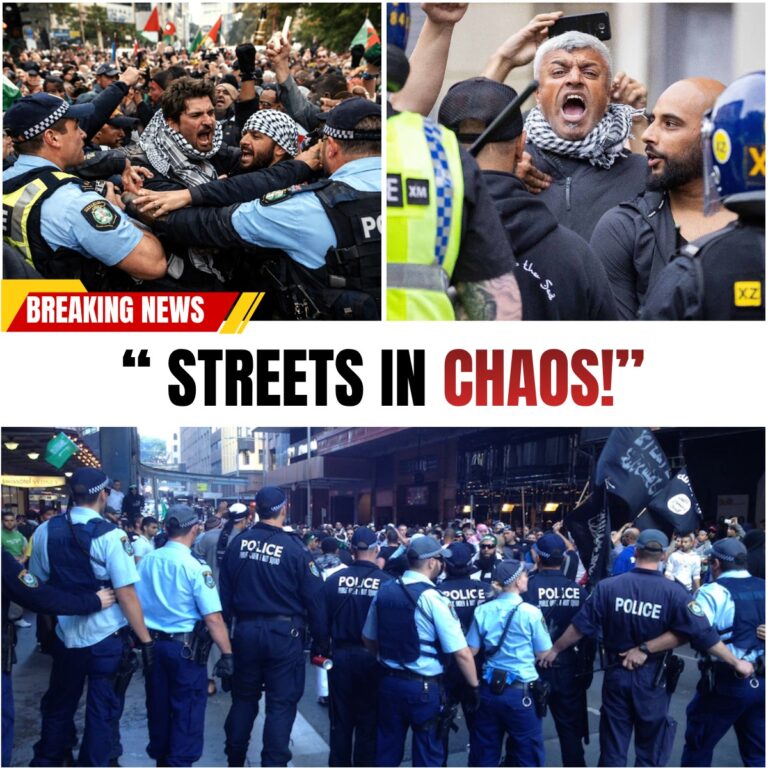
BRITAIN ON EDGE: NIGHT OF UNREST SHOCKS COMMUNITIES AS PROTESTS SPIRAL AND TRUST INSTITUTIONS FACE INTENSE SCRUTINY
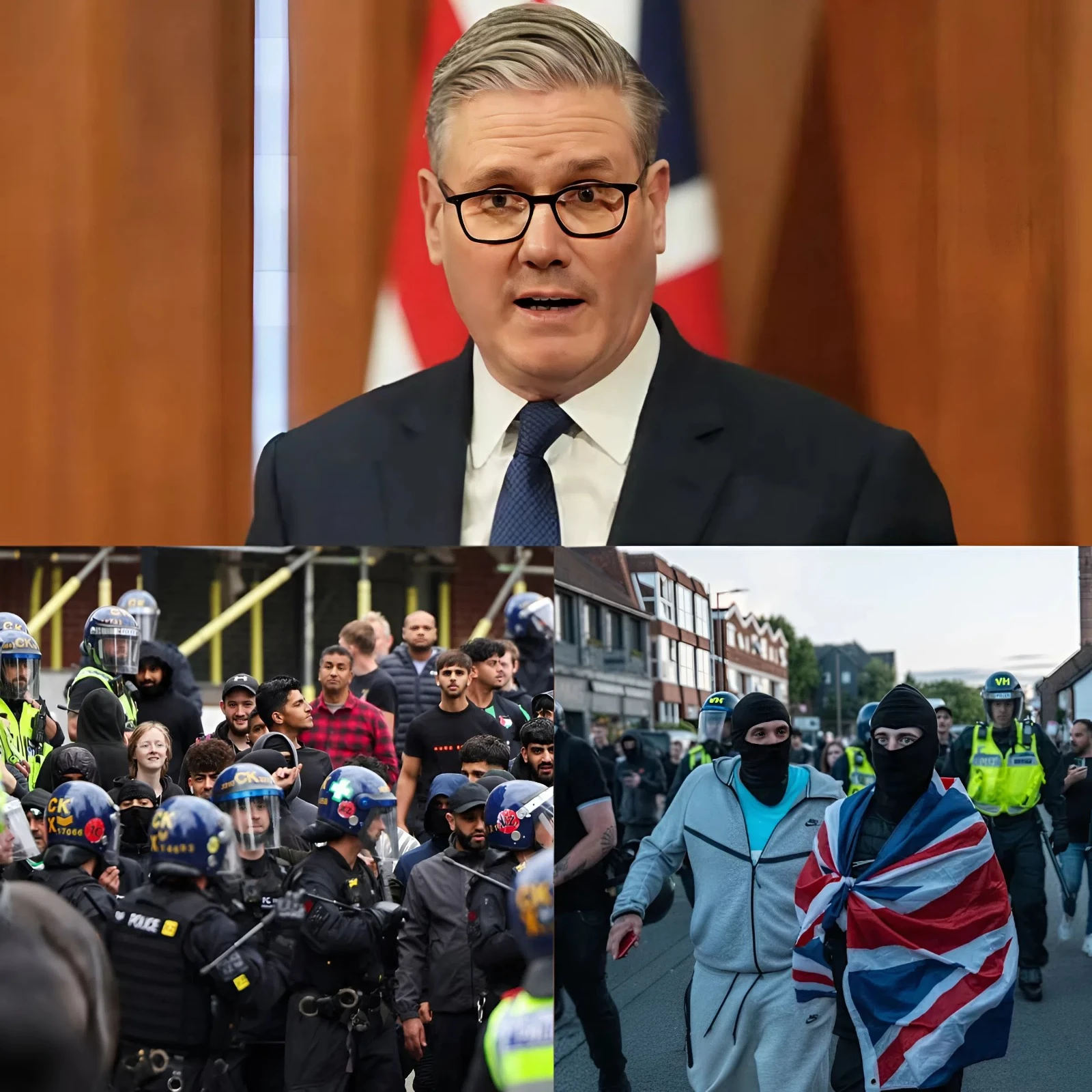
Britain is waking up to the aftermath of a night that many are calling a turning point, as unrest in multiple towns has triggered urgent questions about safety, leadership, and public trust.
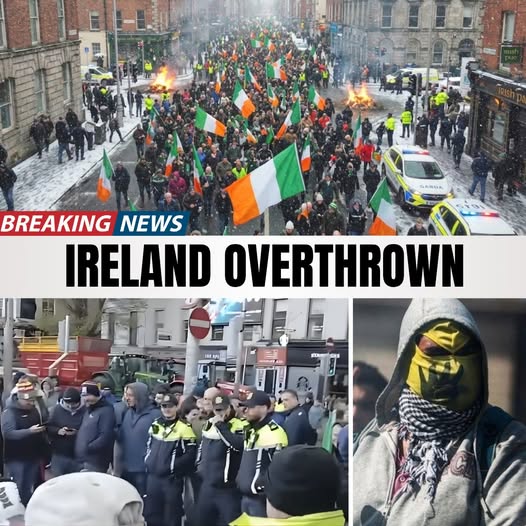
What began as localized protests quickly escalated into chaotic confrontations, with large crowds gathering, tensions rising rapidly, and scenes unfolding that few expected to witness in such intensity.
Eyewitness accounts describe fast-moving groups, damaged property, and clashes that forced authorities to respond under pressure, highlighting just how fragile the situation had become within a matter of hours.
In areas like Rotherham and Tamworth, the atmosphere shifted dramatically as demonstrations intensified, creating a sense that something deeper than a single issue was driving the surge in public anger.
Participants described their presence as a response to long-standing frustrations, pointing to concerns about safety, economic strain, and a perceived disconnect between communities and decision-makers.
At the same time, others warned that the escalation risked undermining community cohesion, arguing that confrontation and destruction only deepen divisions rather than resolve underlying problems.
Police forces were deployed in significant numbers, forming lines, attempting to control movement, and working to prevent further escalation as the situation evolved unpredictably throughout the night.

Despite these efforts, reports indicate moments where officers were forced to withdraw from specific areas, raising questions about preparedness, strategy, and the challenges of managing rapidly changing conditions.
Videos shared online show chaotic scenes, with loud confrontations, flashing lights, and a level of intensity that has captured national attention and sparked widespread discussion across social platforms.
The speed at which these images spread has amplified reactions, drawing strong opinions from all sides and turning a local situation into a national conversation almost instantly.
Some viewers interpret the events as a sign of growing frustration reaching a boiling point, while others see them as evidence of how quickly tensions can spiral when emotions override restraint.
The role of leadership has quickly come into focus, with critics questioning whether enough has been done to address the concerns that many say have been building for years.
Government representatives have called for calm and unity, emphasizing the importance of lawful protest and constructive dialogue, though these messages have been met with mixed reactions.
Supporters of the response argue that maintaining order is essential and that escalation only complicates efforts to find solutions to complex social and economic challenges.
Opponents, however, claim that repeated calls for calm do little to address the root causes of frustration, suggesting that deeper engagement is needed to rebuild trust.
Community voices are increasingly central to the conversation, with individuals sharing personal experiences that reflect a wide range of perspectives on what is happening and why.
Some speak of fear and uncertainty, describing how sudden unrest can disrupt daily life and create lasting anxiety about safety and stability in their neighborhoods.
Others emphasize the importance of being heard, arguing that visible action is sometimes the only way to draw attention to issues they feel have been ignored for too long.
Analysts note that such moments often emerge from a combination of factors, including economic pressure, social change, and perceptions of fairness in how policies are applied.
These overlapping influences create an environment where tensions can build gradually before being released in sudden and highly visible ways.
The events have also reignited debates about policing, with discussions focusing on how authorities respond to large-scale unrest and how those responses are perceived by the public.
Some argue that officers face an impossible task, balancing the need to maintain order with the risk of escalating situations through overly aggressive tactics.
Others question whether current approaches are effective, suggesting that new strategies may be needed to address the evolving nature of public demonstrations.
The economic context cannot be ignored, as rising costs and financial uncertainty continue to shape how individuals interpret and respond to broader societal issues.
For many, these pressures are not abstract concerns but daily realities that influence decisions, attitudes, and levels of trust in institutions.
As a result, events like these become more than isolated incidents, reflecting deeper currents that run through society and influence how people engage with one another.
The involvement of social media adds another layer of complexity, as narratives are shaped, challenged, and amplified in real time by users across the country.

This dynamic environment can both inform and distort understanding, making it difficult to separate verified information from speculation or emotionally charged interpretation.
Political figures are now under increasing pressure to respond not only to the immediate situation but also to the broader concerns that have been brought into focus.
Some are calling for policy changes, while others emphasize the need for dialogue and long-term strategies aimed at addressing structural issues.
Observers suggest that the coming days will be critical in determining whether the situation stabilizes or continues to escalate into further unrest.
The actions taken by both authorities and community leaders will likely play a significant role in shaping the outcome and influencing public perception.
At the same time, there is a growing recognition that quick fixes are unlikely to resolve deeply rooted challenges, highlighting the need for sustained effort and cooperation.
For many watching, the images from the night serve as a stark reminder of how quickly situations can change and how interconnected different aspects of society have become.
What happens in one town can resonate far beyond its boundaries, influencing conversations and attitudes across the entire country.
The sense of uncertainty remains, with questions about what comes next and how different groups will respond to the evolving situation.
Some fear further escalation, while others hope that the visibility of these events will prompt meaningful discussions and constructive action.
In either case, the impact of this moment is already being felt, shaping narratives and influencing how people think about the future.
Britain now faces a critical juncture, where the choices made in response to these events could have lasting implications for social cohesion and public trust.
Whether this becomes a catalyst for positive change or a source of deeper division will depend on how the situation is understood and addressed in the days ahead.

For now, one thing is clear: the conversation has intensified, the stakes feel higher, and the path forward remains uncertain as the nation reflects on a night that few will forget.