SYDNEY ERUPTS IN CHAOS: POLICE CONFRONT RIOTERS IN INTENSE STREET SHOWDOWN!
The heart of Sydney has just been transformed into a literal battleground, leaving the nation paralyzed by images of violence that many thought were reserved for war zones on the other side of the world. What began as a tense standoff in the central business district quickly devolved into absolute bedlam as masked groups surged through George Street, turning one of Australia’s most iconic thoroughfares into a scene of smoke, screams, and shattered glass.
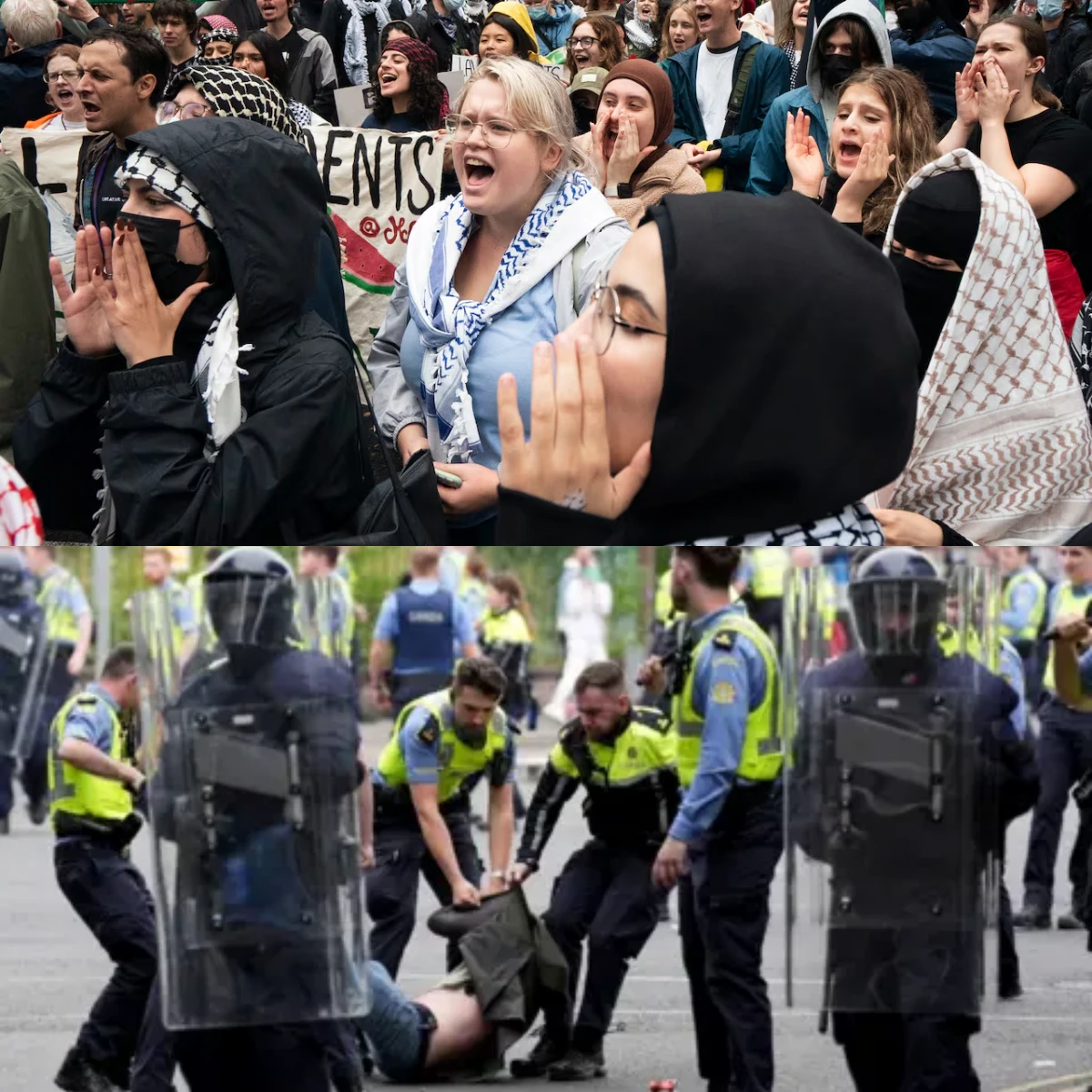
The air was thick with the acrid scent of pepper spray and the deafening roar of a crowd that seemed determined to test the very limits of the state’s patience. Eyewitnesses described a terrifying escalation where bricks and bottles were hurled with lethal intent, forcing ordinary commuters to dive for cover as the thin blue line of the New South Wales Police Force braced for the impact.
This was not a mere demonstration of political disagreement; it was a high-intensity clash that has forced every Australian to ask where the line between “freedom of speech” and “civilian safety” truly lies. For hours, the CBD was held hostage by a disruptive ideology that appeared to prioritize chaos over the democratic process, leading to a confrontation that will be studied for years to come.
Politics

Then came the moment that has since gone viral across every social media platform, sparking a firestorm of debate that is currently tearing through family dinner tables and office breakrooms alike. With a sudden, disciplined roar, the riot squads moved in, shields raised in a wall of obsidian as they charged directly into the center of the volatility.
Batons swung with clinical precision and tear gas canisters rolled across the pavement, creating a sensory overload that finally broke the momentum of the rioters who had thought they owned the streets. In a matter of seconds, the “impenetrable” crowd was scattered like rats in a storm, with dozens of the most aggressive agitators being dragged to the asphalt and cuffed before the cameras of a hundred smartphones.

The footage of the line holding firm has become a lightning rod for a public that is increasingly fed up with what many are calling “imported chaos.” From the balconies above, locals were heard cheering the decisive action, their shouts of “Finally!” echoing through the concrete canyons as the police regained control of the city’s pulse.
However, the silence that followed the clearing of the streets was short-lived, replaced almost immediately by a deafening outcry of “police brutality” and “Islamophobia” from activists and legal observers. Critics are now pouring over every frame of the video, claiming that the level of force used was not a measure of protection, but a calculated display of state-sponsored intimidation.

The division within the Australian public has never been more visible, as the “Law and Order” camp squares off against those who believe the right to protest is being systematically dismantled by a heavy-handed government. The Premier’s defense of the police as being in an “impossible situation” has done little to soothe the anger of those who saw their fellow citizens being punched and pepper-sprayed at close range.
We are witnessing a fundamental shift in the Australian social contract, where the “fair go” is being replaced by a “hard line” that leaves no room for ambiguity or compromise. The question that is currently trending worldwide is simple: Can a modern democracy survive when its streets become the primary venue for religious and geopolitical grievances?

Supporters of the police action argue that Australia is officially “done” tolerating road blockades and the intimidation of the general public under the guise of activism. They see the Sydney “explosion” as the inevitable result of a policy of appeasement that has allowed radicalized elements to believe they are above the law.
On the other side, civil libertarians warn that today’s “law and order” victory is tomorrow’s authoritarian nightmare, where any unpopular opinion can be crushed under the boot of a riot officer. They point to the images of people being ripped from their knees during prayer as proof that the state has lost its moral compass in the pursuit of “public safety.”
The battle for Australia’s streets is no longer a theoretical debate—it is a physical reality that is being fought out in the shadows of the Opera House and the Town Hall. As the 27 people arrested begin their journey through the court system, the nation remains on edge, waiting to see if this was an isolated incident or the opening chapter of a much darker era.
The viral footage continues to rack up millions of views, with every comment section becoming a digital warzone of its own, filled with fury, vitriol, and a desperate search for answers. Are we watching the restoration of peace, or are we watching the radicalization of a new generation that will never forgive the state for what happened in the CBD?
The message from the authorities is crystal clear: the streets belong to the public, and any attempt to weaponize them for a specific ideology will be met with the full, unyielding force of the law. This public line in the sand has been drawn in a way that cannot be erased, forcing every citizen to pick a side in a conflict that shows no signs of slowing down.
Whether you are cheering the cops for their “remarkable restraint” or crying foul over “unhinged aggression,” the reality is that the Sydney we knew yesterday is gone. The city is now a symbol of a global struggle between traditional governance and the rising tide of identity-driven unrest that refuses to be ignored.
As the cleanup crews wash the remnants of the riot from the pavement, the psychological stains remain, deeply embedded in the national psyche of a country that once prided itself on being the “lucky country.” The luck seems to be running out as the pressures of global conflict and local integration collide in a spectacular and terrifying explosion of human emotion.
Every Australian needs to watch the uncensored footage for themselves and decide whether they see a defense of democracy or a betrayal of it. The silence of the “moderate middle” is being drowned out by the screams of the fringes, leaving a vacuum that is being filled by the most extreme voices on both sides of the aisle.
The “Battle for Sydney” is far more than a local news story; it is a preview of the challenges that every western nation will face as the world becomes more connected and more divided simultaneously. We can no longer afford to look away from the “imported chaos,” nor can we ignore the potential for “police overreach” in the name of stopping it.
This is the moment where we decide what kind of country we want to be: one that enforces the law at any cost, or one that allows the streets to become a chaotic marketplace of competing ideologies. The line has been drawn, the batons have been swung, and the world is waiting to see what happens when the smoke finally clears.
Make no mistake, the “Sydney Streets Explode” narrative is currently the most shared topic in the southern hemisphere for a reason—it touches on the rawest nerves of our collective identity. Share this, discuss it, and prepare yourself, because the battle for the streets of Australia is only just beginning.
As more “hidden files” and “bodycam leaks” emerge over the coming days, the controversy is only going to intensify, fueling a magnificent wave of resistance and debate. The truth is somewhere between the “heroic cop” and the “brutal oppressor,” but finding it will require a level of honesty that our political system may no longer be capable of providing.
Keep your eyes on the CBD, because what happened tonight is just the beginning of a national reckoning that will redefine “Australian Values” for the next century. The streets may be clear for now, but the fire is still smoldering underground, waiting for the next spark to turn the “Lucky Country” into a “Warzone” once again.